Cut & Shear
SHEET FEEDER AND LEVELER
From the coil straight to the cutting table, with just one operator.
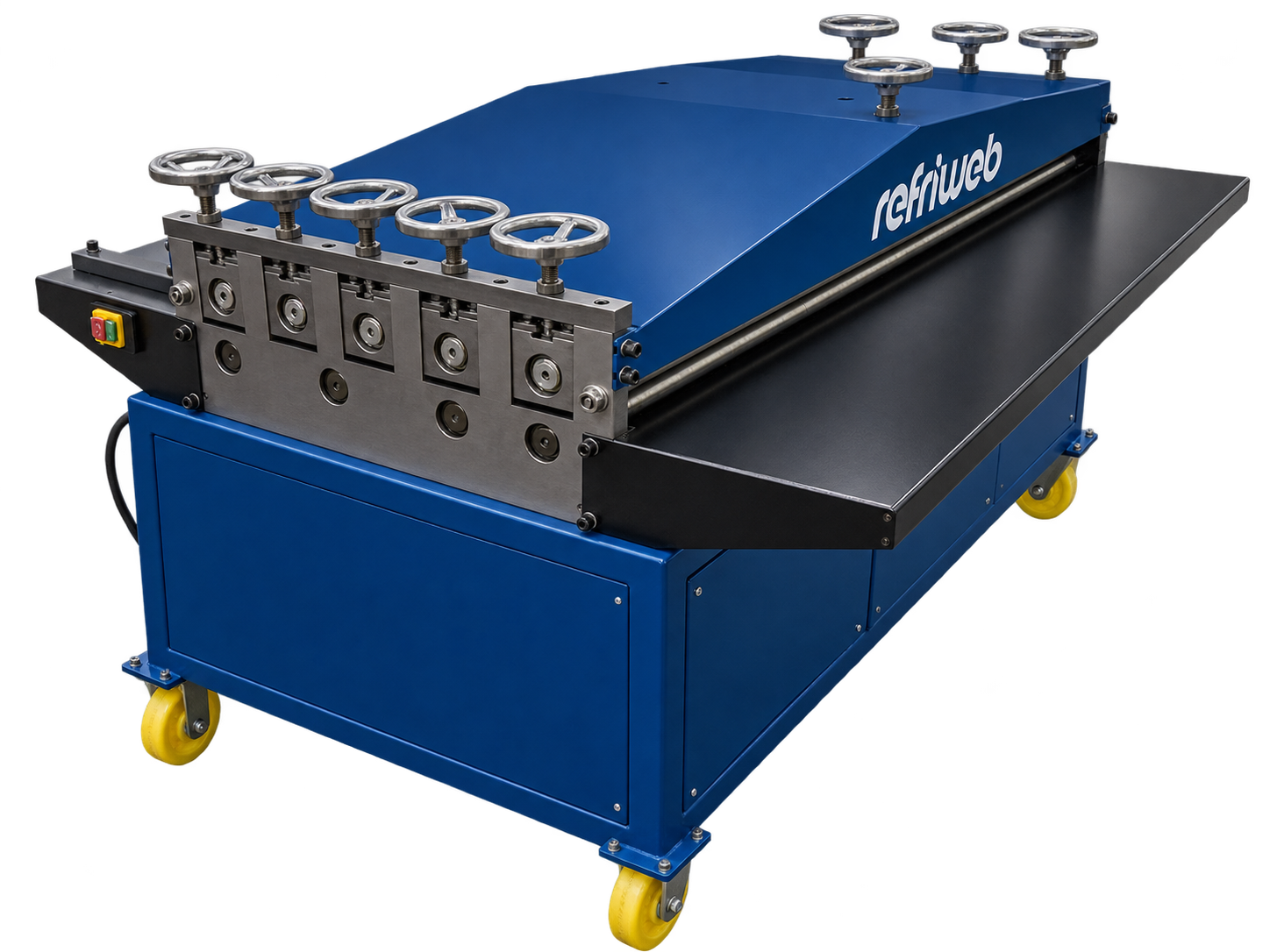
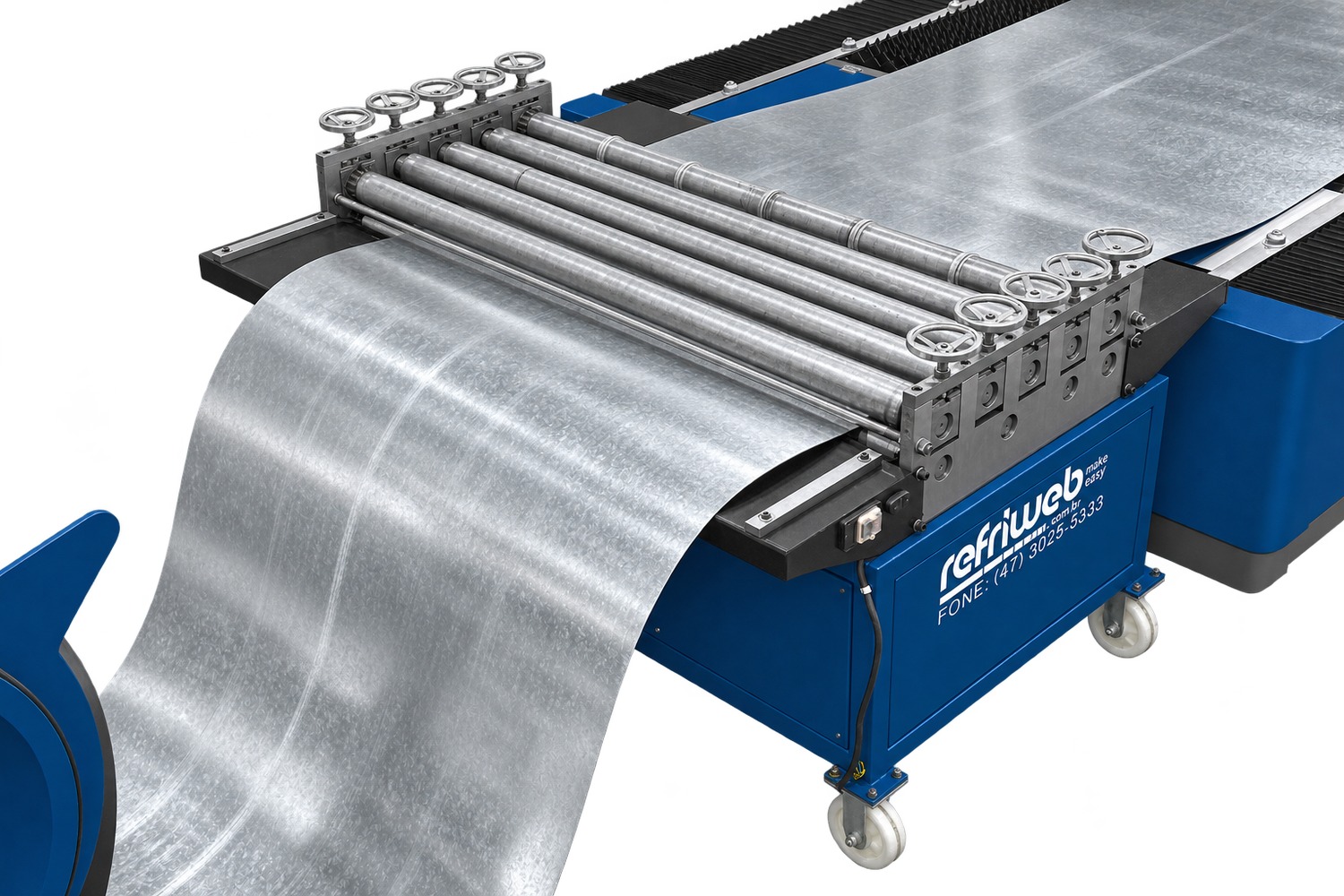
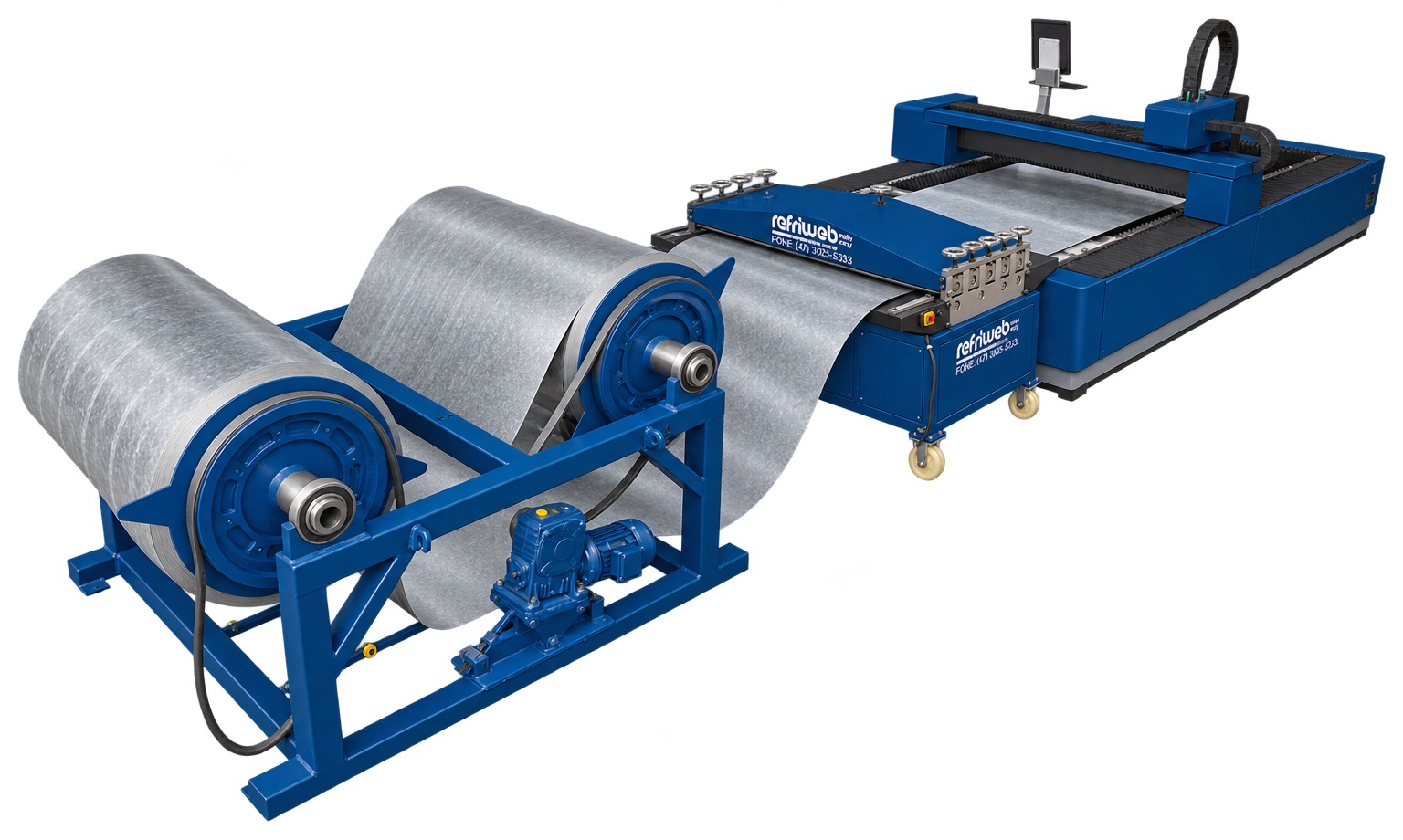
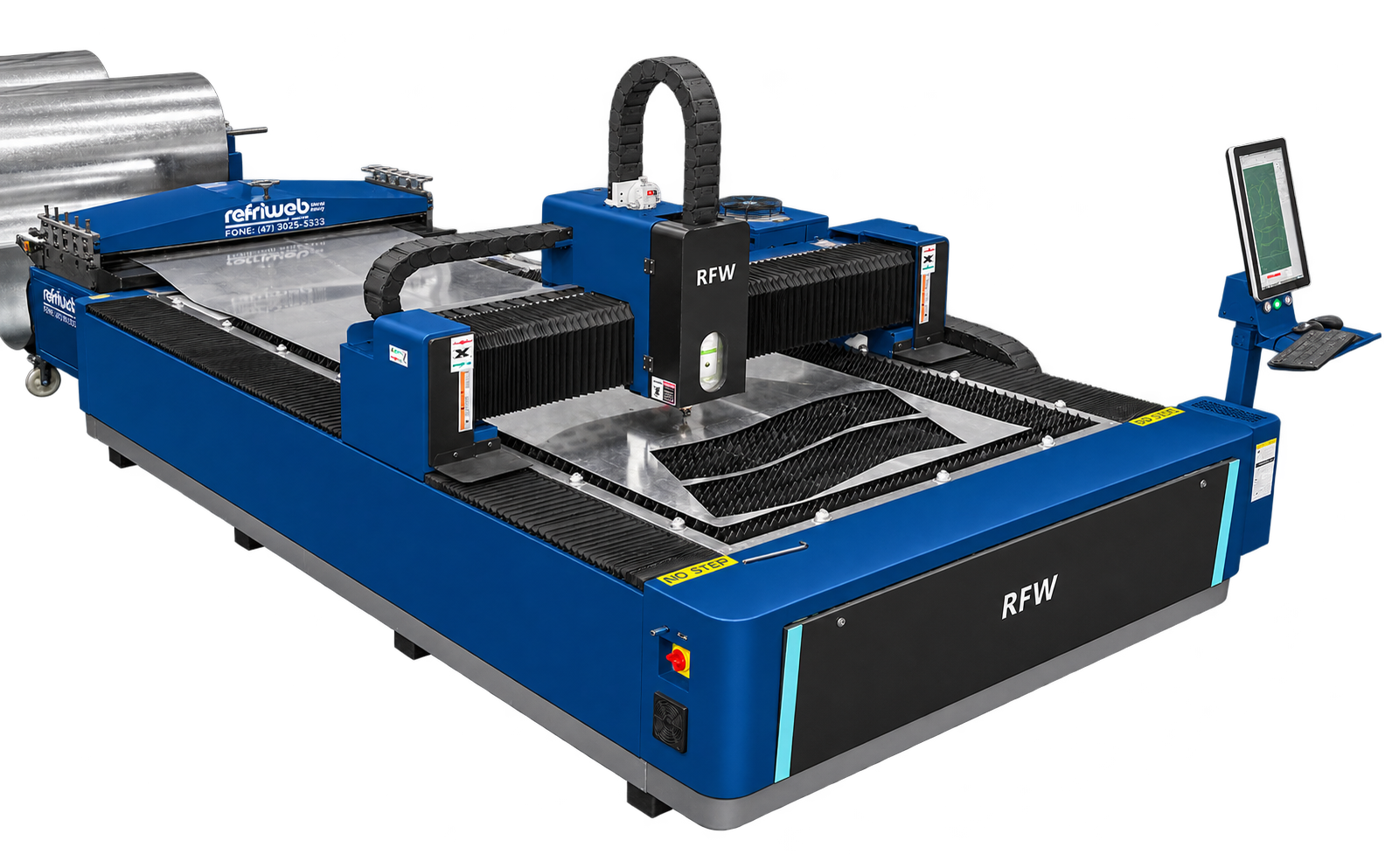
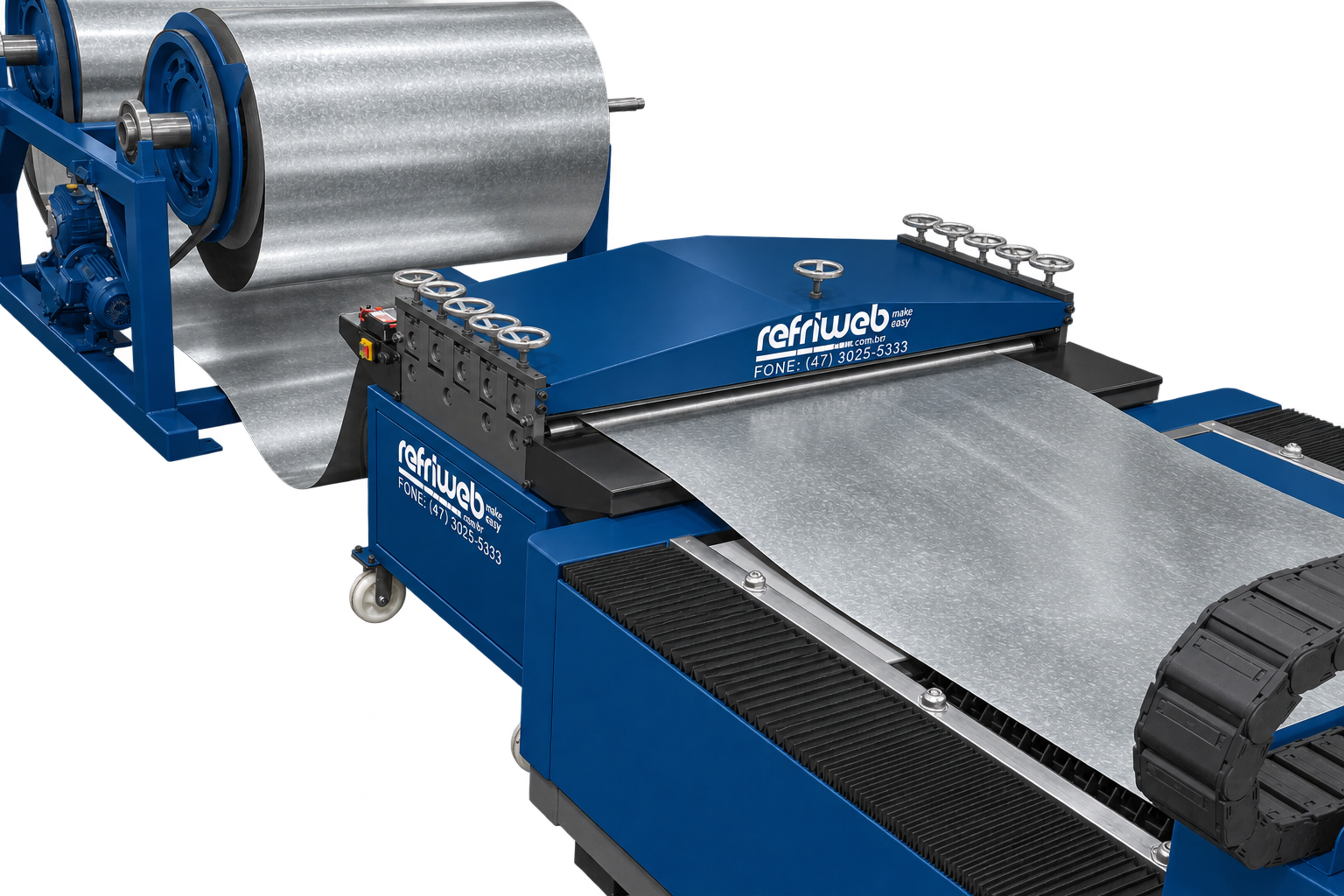
From the coil straight to the cutting table, with just one operator.
The NV2C15/1500 pulls sheet from the coil, levels it, beads it and delivers it to the laser or plasma cutting table in the length the job requires. One operator controls the feed, eliminating the two-person job of placing a 3-meter sheet on the table. The gains show up in three places: payroll, machine hours and sheet scrap.
One operator instead of two
A 3,000 × 1,500 mm sheet weighs from 18 kg (0.5 mm) to 53 kg (1.5 mm), and placing that sheet on the table is a job for two people. With coil feeding, one operator activates the feed and the sheet arrives flat and in position.
Ready to cut again in seconds
Once cutting is finished, the coil advances and the next sheet is already positioned. No fetching sheets from stock, no carrying them, no aligning them on the table: the machine is cutting again in seconds.
More than an extra day of cutting table time per week
On a manually fed 3-meter table, each hour includes around 15 minutes of loading, 15 minutes of part removal and only 30 minutes of cutting. Removing manual loading frees up more than 9 hours of table time per week in a 40-hour shift pattern. That is around 30% more cutting on the same machine.
Long lengths, without joints
A coil does not end at the 3-meter length of a standard sheet. A long part comes out in one piece, up to the length your table can accommodate.
Less sheet ending up as scrap
The sheet is cut to the length the job requires, so nobody places 3 meters on the table to use only 2. In ductwork shops, scrap falls from 12% to 5% when switching from individual sheets to coil, with nesting software arranging the parts on the strip.
Coil costs less than cut sheet
The price of cut sheet (a blank) includes the cross-cutting performed by the service center. With coil, you buy the same steel without paying for that cut: purchasing savings can reach 15%.
Flat sheet, assured cutting
Sheet comes off the coil with a memory of being wound: longitudinal curvature (coil set) and transverse curvature (crossbow). The leveling rollers bend the sheet in alternating directions, beyond its yield point, and redistribute the residual stresses from coiling. On the table, this determines the cut. Curved sheet moves out of the laser's focal distance and the torch's operating height, while a part with retained stress can lift between the slats and hit the cutting head.
Beading required by standards
The proposal cites ABNT NBR 16401-1 as requiring structural beads in ducts over 500 mm, and the SMACNA manual for sides of 19 inches and above. The NV2C15/1500 delivers sheet already beaded, in the same pass as leveling.
Ergonomics and occupational health
NR-17 does not permit manual transport of loads whose weight compromises the worker's health or safety, and the NIOSH reference for lifting under ideal conditions is 23 kg. A 3,000 × 1,500 mm sheet reaches that weight at a thickness of 0.65 mm, while remaining flexible and sharp-edged. With coil feeding, nobody carries sheets to the table.
Less stock, less space
Stock changes from stacks of sheet to ready-to-use coils. The machine occupies 1.9 × 1.1 m of floor space and stands on casters.
How much it gives back each month
An example of a shop consuming 5 metric tons of sheet per month, working 40 hours per week, with one cutting table operator and one helper (average CAGED wages, including employment costs: R$ 17.27 per hour each). The figures are deliberately conservative:
- Labor: 84 fewer person-hours per month spent feeding the table, R$ 1,450.
- Cutting table: 40 machine hours per month freed up for cutting, R$ 3,200 at R$ 80 per hour.
- Sheet: 7% less steel for the same parts, with scrap falling from 12% to 5%, R$ 11,000. This figure assumes that nesting software arranges the parts on the coil strip.
Total: around R$ 15,700 per month.
Substitute your factory's own figures and see how many months it takes for the machine to pay for itself. In the United States, a shop owner accepts waiting around five years for a machine like this to pay for itself.
Return on investment
| Item | Estimate |
|---|---|
| Cutting table hours freed up | 9.3 hours per week |
| Additional production on the same table | +30% |
| Labor for table feeding | R$ 1,447 per month |
| Cutting table time no longer spent idle | R$ 3,236 per month |
| Sheet savings | R$ 11,000 per month |
| Total gain | R$ 15,683 per month |
| RETURN ON INVESTMENT IN | 3 months |
Estimate for a shop consuming 5 metric tons of sheet per month and working 40 hours per week, based on the investment package in the proposal (machine and uncoiler). Average CAGED wages and market prices for 2026; sheet savings assume nesting software arranging the parts on the coil strip. Recalculate using your factory's own figures.
References cited in the proposal:
- SMACNA, HVAC Duct Construction Standards: Metal and Flexible.
- ABNT NBR 16401-1, Annex B.
- NR-17, Ergonomics.
- NIOSH, lifting equation.
- SNIPS magazine, February 2017 (scrap from 17% to 3%) and 2006 (payback calculation).
- Modern Metals magazine, May 2023 (buying coil).
- The Fabricator (leveling and residual stresses).
- Portal Salário/CAGED 2026 (wages).
- Magis Soluções 2026 (sheet price).
Stop paying two people to carry sheet. Put the coil to work.
Remote guidance for installing, maintaining and operating the equipment is included.
This proposal includes one day of training at our premises.
Especificações técnicas
- Working width: 1,500 mm
- Sheet thickness: Up to 1.5 mm (16 Ga)
- Stainless steel thickness: Up to 0.9 mm (20 Ga)
- Feed speed: 10 m/min
- Model: NV2C15/1500
- Power: 2.2 kW
- Electrical supply: 220/380 V, three-phase (3F)
- Dimensions (H × W × D): 1.1 × 1.9 × 1.1 m
- Weight: 610 kg
- NCM code: 8462.29.00
- Availability: Upon request
- Remote control and inverter: Upon request
Veja também
Square Duct
TDC 25 mm and Pittsburgh former
25 mm TDC profile forming and Pittsburgh lock forming.
Cut & Shear
CNC hydraulic angle punch
Automatic hydraulic machine for cutting and punching angle iron.

Round Duct
Hybrid gore elbow former, 18 Ga
Quick-assembly segments, guaranteed airtightness and high durability.
- Gore elbow
- Offset
- Reducer